

How to design an immersive experience that still works in year three
Sponsored content. This article was supplied by a third party and Business Money has been paid to publish it.
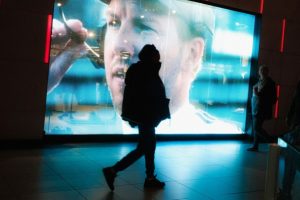 Immersive installations photograph beautifully on opening day. The interesting question is what they look like eighteen months later, once the launch content has run its course and the novelty has worn off for regular visitors.
The projects that hold up were designed around a story and a maintenance plan rather than around a piece of hardware. That distinction shows up in the brief long before it shows up in the room.
Key takeaways
- Define the narrative and the visitor outcome before selecting any technology.
- Technology choice should follow the physical space, since projection, LED, and XR each suit different conditions.
- Content refresh is the highest recurring cost and the one most often left out of budgets.
- Involve the architect early, because structure, power, and sightlines are difficult to change later.
- Accessibility belongs in the design brief, not in a remediation pass after launch.
- Agree how success will be measured before the install rather than after.
Start with the story, not the hardware
The most common failure in this category is technology-led briefing. Somebody sees a projection-mapped façade or a motion-responsive floor at a trade show, and the project begins with the effect rather than the reason.
Work backwards instead. Decide what a visitor should understand, feel, or do differently after passing through the space, then choose the technology capable of producing that.
This matters commercially as well as creatively. A clear narrative objective gives you something to evaluate proposals against, and it makes the inevitable budget conversation a discussion about priorities rather than a straight cut.
The technology follows the space
Physical conditions narrow the options faster than preference does. Ambient light, ceiling height, throw distance, sightlines, and dwell time all rule certain approaches in or out before aesthetics enter the conversation.
Projection suits large irregular surfaces and architectural features, and it can cover areas that would be prohibitively expensive in LED. It struggles in bright ambient light and needs unobstructed throw paths that busy spaces do not always allow.
Video walls and direct-view LED handle high ambient light and deliver consistent brightness, which makes them the default for lobbies and concourses. The tradeoff is cost per square foot and a rectangular format that resists organic architecture.
Motion response and interactive floors work where dwell time is short, and participation is the point.
Extended reality suits deep individual engagement, though headset logistics, hygiene, and throughput become real operational constraints at volume.
Audio is the element most often under-specified. Immersive sound does more to create a sense of presence than an additional display does, and it usually costs less than the visual system it supports.
Content is the cost nobody budgets
Hardware is a capital line item that everyone sees. Content is an operating cost that recurs, and it is where immersive projects quietly fail.
An installation running the same three-minute loop for two years stops working on repeat visitors.
Museums, corporate lobbies, and stadiums all need a content calendar and a budget attached to it, ideally with a rough refresh cadence agreed at the design stage.
This is why immersive experience design is better treated as a program than a project. Diversified frames its work in this space around experiential design and content alongside the technology, spanning extended reality, projection, data visualization, motion response, and video walls rather than any single format.
Data visualization deserves a specific mention here. Turning live operational or performance data into a display gives you content that updates itself, which solves part of the refresh problem structurally rather than through repeated production spend.
Bring the architect in early
Immersive work interacts with the building in ways that ordinary AV does not. Structural loading for large displays, power and cooling capacity, cable routes, projector mounting positions and acoustic treatment all become expensive once the design is fixed.
The good integrators in this space work alongside architects from the concept stage. Diversified describes its experiential design team as partnering with architects directly, which is the model to look for if you are building or refitting rather than retrofitting into a finished room.
Sightlines are the detail most often missed. An installation designed on plan can look entirely different once you account for where people actually stand, how they move through the space, and what obstructs the view at eye level.
Accessibility is a design input
Immersive environments create accessibility challenges that conventional displays do not, and retrofitting solutions is far harder than designing them in.
Rapid flashing content carries a genuine seizure risk, and standard accessibility guidance sets limits on flash rates that immersive content should respect. Audio-driven experiences need a visual equivalent, and visually driven ones need an audio or tactile path.
Physical access matters too. Interactive surfaces mounted at standing height exclude wheelchair users, and headset-based experiences need an alternative for anyone who cannot or will not wear one.
Decide how you will measure it
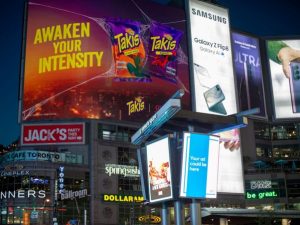 Immersive projects are unusually prone to being evaluated on vibes. Agree the measure before you build, because retrofitting a success metric onto a finished installation produces whatever answer the person asking wants.
Reasonable measures exist depending on context. Dwell time and completion rate suit museums, footfall and social sharing suit retail and lobbies, and event attendance or fan engagement suit sports venues.
For corporate spaces, the honest measure is often recruitment and client meetings. If a lobby installation is really about impressing candidates and prospects, say so in the brief and evaluate it on that.
Whatever you choose, capture a baseline before launch. Without one, you cannot separate the installation’s effect from everything else changing in the space at the same time.
Conclusion
The immersive projects worth copying are not the ones with the largest screens. They are the ones where somebody wrote down what the space was supposed to achieve, chose the technology that suited the building rather than the trade show, and budgeted for content past the launch date.
Get those three right and the technology decisions become straightforward. Get them wrong, and no amount of pixels will save the result.
If you are at the concept stage, resist the temptation to specify equipment. Write the story first, then let the building and the audience tell you what the story needs.
Frequently asked questions
How long does an immersive installation take to deliver? Design and content production usually take longer than the physical install.
Concept, narrative development and content creation are the long poles, particularly where bespoke content is being produced rather than licensed.
Projection or LED? It depends on ambient light, surface geometry, and budget. Projection covers large irregular surfaces more economically, while LED wins in bright environments and where consistent brightness matters.
How often should content be refreshed? Frequently enough that repeat visitors see something new, which varies from monthly in a corporate lobby to seasonally in a museum. Agree on the cadence at the design stage so it lands in the operating budget.
Is XR worth it for a permanent installation? Sometimes, though, headset logistics limit throughput and add operational overhead. For high-volume spaces, projection or interactive surfaces usually serve more people per hour.
Who should own the project internally? Whoever owns the visitor or employee experience, supported by facilities and IT. Purely technical ownership tends to produce technically impressive installations that miss the narrative.