

Turning outdoor skills into income: Business opportunities in recreational gold prospecting
Sponsored content. This article was supplied by a third party and Business Money has been paid to publish it.
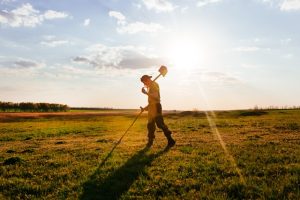
Photo by Evgeniy Kozlov on Unsplash
An experienced gold prospector already has several marketable assets. Such as? Practical field knowledge, equipment expertise and the ability to recognise promising ground.
Turning such qualities into income is more than possible. There are various opportunities you could explore to create a business from your recreational gold prospecting skills.
Sell valuable finds
Valuable finds like gold flakes, gold nuggets, old coins and antique jewellery may have resale value, although every discovery should be assessed carefully. Weight, purity, condition, history and collector interest can all affect what someone is prepared to pay.
Scrap dealers may suit small quantities of ordinary gold, while collectors could pay more for distinctive natural nuggets or historically interesting objects.
Online marketplaces and specialist auctions create additional options (but beware of marketplace scams). However, seller fees, postage, insurance and authentication costs must be included when calculating profit potential.
Also, understanding local reporting rules is crucial before you sell any finds. Laws covering minerals, coins, artefacts and objects found on private or public land differ between locations.
Keep accurate notes about where items were recovered and check reporting obligations before offering a find for sale.
Also, quality presentation can increase buyer confidence and make worthwhile finds easier to market. Photograph each item clearly, record accurate measurements and avoid aggressive cleaning until you know whether an item’s original surface contributes to its value.
Offer recreational prospecting lessons
Recreational prospecting beginners often pay for guidance because learning alone can be frustrating. After all, things like recognising potentially gold-bearing gravel, classifying material and separating fine gold require technique.
Start with short individual lessons or small-group workshops that cover the basics. Useful beginner sessions could focus on areas like:
- Reading streams to locate likely gold traps
- Setting up detectors for different ground conditions
- Panning concentrates without losing fine gold
Structured lessons should also include safety, responsible digging and land-access rules.
And providing equipment during early sessions will help hesitant participants try the activity before buying their own gear.
Clear expectations are essential. Market the experience as skills training and outdoor discovery rather than promising that every participant will find valuable gold.
Hire out prospecting equipment
When you are familiar with prospecting equipment, you will be well-positioned to help newcomers choose and use suitable tools. Hiring out equipment can create more predictable income than depending on discoveries, especially near popular prospecting areas.
Gold prospecting equipment includes metal detectors, gold panning kits, classifiers, concentrators, snuffer bottles, and sluice boxes – all of which are available from Serious Detecting.
Create simple packages for beginners, families and experienced prospectors. Each package should have a written inventory, operating guide, cleaning policy and clear agreement covering deposits, damage and late returns.
Offering a ten-minute demonstration at collection can reduce misuse and improve the customer’s experience. Also, providing optional extras such as maps, sample bags, digging tools and protective cases may increase the value of each booking.
Lead small guided prospecting trips
Local knowledge becomes valuable when visitors do not know where prospecting is permitted or how to recognise promising ground. Guided trips should combine instruction, equipment access and an organised outdoor experience within one service.
Begin with manageable half-day outings on land where commercial guiding is allowed. Secure written permission where necessary and confirm whether business licences, insurance or activity permits apply.
Customers usually value more than the chance of finding gold. Stories about local geology, old workings and historic prospectors can turn a basic field session into an experience worth recommending.
Before each trip, prepare a weather contingency plan, carry first aid supplies and collect an emergency contact for every participant. Also, give customers an honest difficulty rating in advance so they can judge whether the terrain suits their fitness and experience.
Sell reports and site plans
Hours spent studying geology, historic records and land maps help to build another useful skill set. Prospectors who enjoy research could create a business by preparing location reports or trip plans for people who lack the time to investigate potential locations themselves.
Reports might cover regional geology, historic mining activity, access points and equipment suited to likely conditions. Avoid claiming that a location will produce gold, though, since even excellent research cannot guarantee a profitable result!
Private land access can create another income opportunity. A prospector with strong local relationships may help organise permission-based outings, provided every arrangement is transparent and approved by the landowner.
Responsible research must include current boundaries, active claims and protected sites. Customers should also be reminded to verify local regulations before travelling, as access conditions can change.
Create useful prospecting content
Field experience can be turned into online content like videos, articles, or digital guides. Useful content might demonstrate detector settings, compare panning methods or explain how to identify productive sections of a creek, to name just a few options.
Income may come from advertising, memberships, sponsorships or downloadable resources. According to AARP, valuable finds are possible with metal detecting, but they do not provide dependable earnings for most detectorists.
Therefore, content gives you a way to earn from every trip, including days when nothing valuable is recovered.
Honest reports about mistakes, difficult conditions and disappointing locations can be just as helpful as footage of successful finds.
Protect sensitive sites when sharing photographs or videos. Concealing exact locations helps prevent trespassing, overcrowding and irresponsible digging.
Building a business around your prospecting skills
Recreational prospecting can generate income, but the strongest approach combines several services instead of depending on rare discoveries. Equipment hire, lessons, guided experiences and research can provide steadier opportunities while keeping the outdoor element enjoyable.
Start with one service that matches your experience, test demand and track every cost. Whichever option you select, your knowledge, reliability and responsible approach can become the qualities that customers remember. In turn, you can build a profitable business.
So, consider turning your field experience into a rewarding niche venture that brings in a new stream of income. And if you have found this article to be helpful, then take a moment to explore some of our other informative posts.