

Comprehensive AML software guide: Features & compliance
Sponsored content. This article was supplied by a third party and Business Money has been paid to publish it.
 AML software guide: Understanding features and compliance benefits
Key highlights
- AML software helps businesses handle regulatory requirements with less manual work.
- Strong AML compliance software combines identity checks, transaction monitoring, reporting, and training.
- In Australia, AUSTRAC alignment matters for financial institutions and other regulated sectors.
- Good tools support compliance teams with audit-ready records and alerts.
- easyAML brings key functions into one platform for simpler day-to-day compliance.
Introduction
AML software is now a practical need for businesses facing growing AML compliance duties in Australia. It helps financial institutions and newly affected sectors manage checks, records, and reporting without heavy manual processes. If you want clearer regulatory compliance, faster workflows, and fewer gaps, understanding what these tools do is the right place to start.
Understanding AML software solutions in Australia
Australian businesses are preparing for wider AML obligations, especially with Tranche 2 changes approaching. That means AML software compliance is no longer just a bank issue. It is becoming important for firms that need a simple way to manage financial crime controls and meet regulatory requirements.
For many teams, the challenge is not willingness. It is time, experience, and keeping up with change. That is why local software built around AUSTRAC processes stands out. The next sections explain why that matters in daily compliance work.
What makes AML software essential for local compliance
AML software simplifies complex compliance by turning regulatory requirements into guided tasks. Instead of relying on memory or spreadsheets, teams follow structured workflows with clear roles and audit-ready records, improving risk management.
This also protects the financial system by helping firms spot gaps early. Tools like a guided program builder create policies and controls tailored to your sector and risk profile.
easyAML is built for businesses without compliance experience, reducing pressure on small teams. Staff can follow step-by-step actions, complete training, and maintain core controls without starting from scratch.
Overview of Australian regulatory requirements
Australia’s AML regulations require enrolling with AUSTRAC, creating an AML/CTF program, customer verification, recordkeeping, and suspicious activity reporting. Early preparation is key since these steps take time.
Software streamlines compliance by connecting each requirement to a workflow. For example, one-click AUSTRAC-ready reports are prefilled and checked with prompts before submission, making reporting faster and more accurate.
Leading tools for financial institutions and Tranche 2 businesses also store records securely for over seven years and send deadline reminders—directly supporting AUSTRAC’s expectations in daily operations.
Key features of AML software explained
When people ask what AML software actually does, the answer is simple: it helps you verify customers, monitor activity, assess risk, train staff, and report issues. The best AML compliance software puts these key features in one place.
That matters because scattered tools slow teams down. A single platform with monitoring, identity checks, and advanced analytics can cut duplication and reduce avoidable mistakes. Two features deserve closer attention first.
Automated transaction monitoring in practice
Yes, AML software automates transaction monitoring by reviewing customer activity continuously and flagging unusual patterns in real time. This removes much of the delay found in manual reviews and helps you catch suspicious activity earlier.
A practical example is continuous monitoring that re-checks customer behaviour after changes are detected. If behaviour shifts, the system can re-evaluate risk assessments and prompt your team to consider a report.
- It tracks transactions and customer behaviour in real time.
- It highlights potential threats through alerts and behavioural analysis.
- It prompts action when suspicious activity may need AUSTRAC reporting.
Integrating KYC with AML software for seamless customer checks
AML software streamlines KYC by linking identity verification, screening, and record creation in a single workflow. Teams collect data once, strengthening due diligence without switching systems.
For example, clients receive a link for a quick 60-second check. The system manages liveness validation, biometric verification, location data, and document checks—supporting AML compliance with minimal friction.
This also enhances customer experience. After identity checks, the workflow can add PEP screening, sanctions checks, adverse media screening, and beneficial owner checks. These features benefit accountants, real estate professionals, and lawyers using AML compliance software.
Compliance benefits of using AML software
 The biggest compliance benefits are consistency, speed, and better visibility. AML software reduces reliance on scattered files and manual follow-up, which helps with risk management and stronger regulatory compliance.
There is also a practical business benefit. If your team spends less time chasing documents or rebuilding reports, they can focus on review and decision-making instead. Next, we will look at risk reduction and real-time detection.
Reducing risk and meeting AUSTRAC standards
AML software helps you meet compliance obligations consistently. It streamlines risk assessments, policy setup, customer checks, reporting, and record storage—aligning with AUSTRAC requirements.
This reduces the risk of missed steps that could lead to regulatory or reputational issues. Platforms that update automatically when regulations change save you from manual fixes.
Smaller firms also benefit from greater confidence. easyAML offers guided AML compliance setup for conveyancers and service providers, simplifying local standards ahead of July 2026.
Enhancing efficiency with real-time suspicious activity detection
Real-time suspicious activity detection helps because the system does not wait for a manual review cycle. It watches activity continuously, flags unusual behaviour quickly, and prompts your team when action may be needed.
That improves fraud risk management and operational efficiency at the same time. Instead of checking everything by hand, staff can focus on alerts that matter. This is one area where software can save major time compared with manual compliance processes.
- Continuous monitoring spots changes as they happen.
- Real-time alerts support faster internal review.
- Prompted reporting workflows help teams respond without delay.
Choosing the right AML software for your business
Choosing the right software means looking beyond basic checks. You need something that fits your business size, your workflow, and your compliance duties. For many financial services firms and professional practices, modern platforms should cover the full process, not just one task.
Cost matters too, but so does usability. A cheaper tool that leaves gaps can create more work later. Here is how to assess functionality and compare providers in Australia.
Evaluating functionality and flexibility
Begin with essential features: customer due diligence tools, monitoring, reporting, training, and secure storage. Effective compliance technology should offer audit trails and guided actions—not just data collection.
Flexibility is key since industries have different needs. Real estate offices, law firms, and accounting practices often require tailored workflows. All-in-one platforms are generally easier to manage than piecemeal solutions.
| Feature | What to check |
| Customer due diligence | ID verification, KYB, beneficial owner checks, sanctions screening, adverse media screening |
| Monitoring | Continuous monitoring, behavioural analysis, alerts, risk reassessment |
| Reporting and records | AUSTRAC-ready reports, reminders, audit trails, 7+ years of storage |
| Team support | Training dashboard, role controls, case management guidance |
Steps to compare AML software providers in Australia
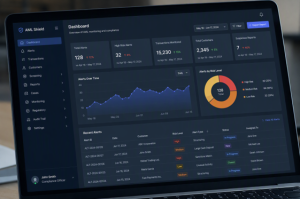 When comparing AML software providers, use a simple review process: ensure the platform is AUSTRAC-compliant, supports your sector, and is easy for your team to use. This helps avoid a poor fit.
Compare all-in-one solutions with partial tools. For example, easyAML covers program setup, checks, monitoring, reporting, and training—helping reduce costs by streamlining admin.
- Ask compliance officers which tasks are most time-consuming.
- Confirm proper training is included upfront.
- Check that local Australian support is available when rules change.
Conclusion
Adopting AML software is essential for businesses to manage compliance and risk. With features like automated transaction monitoring and KYC integration, these tools boost efficiency and ensure adherence to Australian regulations. The right AML solution protects your business from financial crime and strengthens compliance. When choosing software, evaluate its features and flexibility to find the best fit. For guidance, contact us for a consultation.
Frequently asked questions
How does AML software automate compliance tasks?
AML software automates data collection, customer checks, monitoring, alerts, and reporting prompts in real time. This cuts manual processes, reduces human error, and helps compliance efforts stay consistent, especially when teams need to manage records, reviews, and reporting duties together.
What should financial institutions check before adopting AML software?
Financial institutions should check whether the system supports their regulatory obligations, includes the necessary features, keeps clear audit trails, and offers adverse media screening. It should also fit daily workflows well enough to protect customer trust and support staff use.
What are the latest trends in AML software for 2026?
Current trends include stronger artificial intelligence and machine learning for monitoring, better sanctions screening, and wider use of advanced analytics. There is also more focus on enhanced due diligence, automated risk updates, and simpler all-in-one tools for smaller Australian businesses.